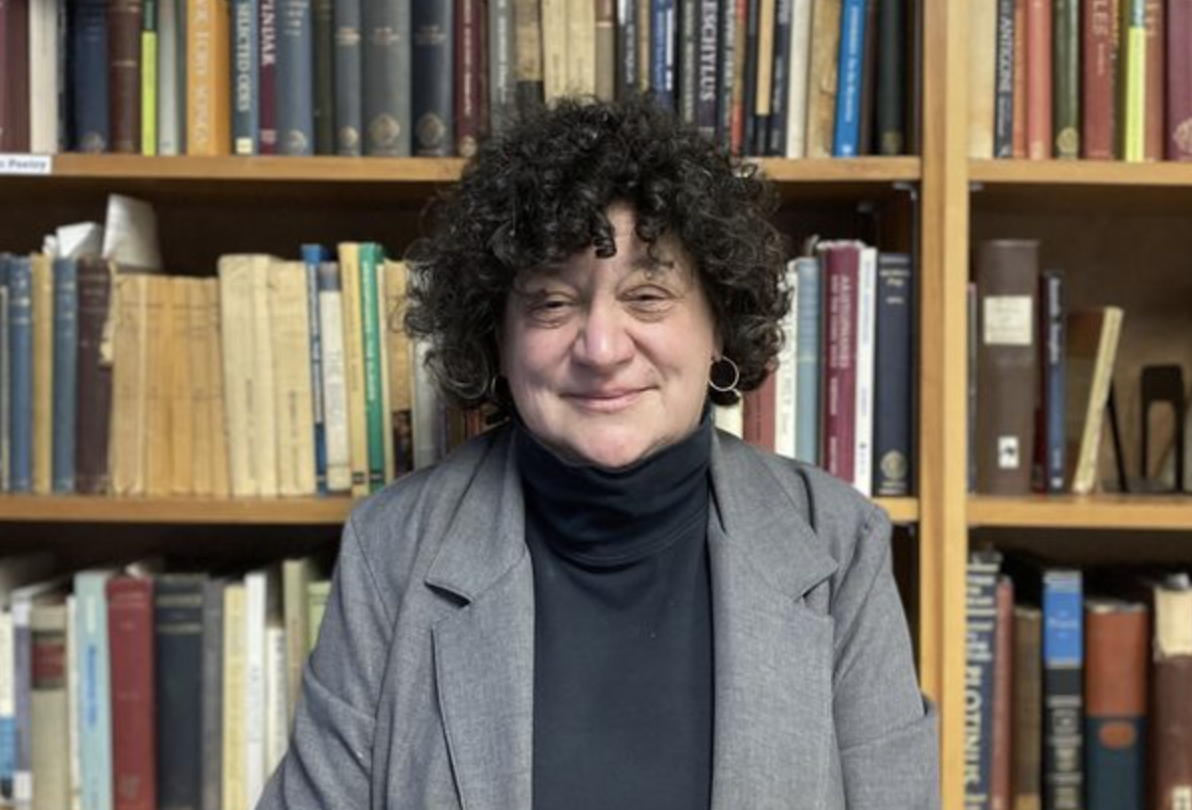
Professor Stephanie Nelson teaches Classics at Boston University, where she’s also the director of Graduate studies. You can find a list of her publications here. We’ll be asking about her lifelong fascination with the novels Ulysses (1922) and Finnegans Wake (1939), considered among the most difficult in English literature. If you don’t believe me, try reading this! She’s especially interested in the way their Irish author James Joyce appropriates ancient texts, such as Homer’s Odyssey and Ovid’s Metamorphoses, “transforming, distorting, and in a way repudiating the original, but also acknowledging a deep and even formative debt.”
We met several months ago over video call when I was working on an extended essay about Homeric influence in Ulysses, and she was introduced as a world-leading expert on the topic. Professor Nelson was not only extremely knowledgeable but also very generous with her time, and it was a great pleasure to speak to another Joyce fan. This interview also took place online, from Boston to France; here are transcribed excerpts from our conversation.
LB: You’ve written lots about Joyce over your 30-year career, from comparing narrative time or the role of cattle in Ulysses with the Odyssey to analysing the essay topics of Finnegans Wake 2.2. But how did you first come across the author’s works?
SN: This is incredibly serendipitous and lucky. I was at University, it was the summer, and I was home. My parents had a big library and I would pick off books from the shelves that I'd heard of. I saw Ulysses, and I'd heard that there were dirty bits in it, so that, of course, made it all the more attractive. I said to myself, being a precocious kid: that’ll be fun, I’ll just read Ulysses. So I sat down in the living room and I started reading Ulysses. And - this is what happens to pretty much everybody, and I've heard this story so often - I got to the Proteus episode, got about halfway through that, and said: well, maybe not.1 I put the book aside and then I said: I don’t know, what the hell, maybe I’ll read it anyway. That’s what I did: I sat down, read the book, and understood maybe a tenth of it. Then for a while I just read it every summer.
The real advantage is - practically nobody does this anymore - picking up the book absolutely blank. I never looked to the commentary, I never read an essay, I never had anyone telling me what it was supposed to be about, l never looked up any of the references, I never went online and used the Joyce Project. That’s exactly what Joyce wanted, I think: every time you read it, it becomes a little bit clearer, then you start seeing how all the various elements fit together. That’s the experience he’s really looking for. I very often say that he deliberately sets it up so it’s impossible to understand the references the first time you get them: when Bloom does the “potato I have,” there’s no way in the universe you’d know why he’s carrying around a potato.2 But, as I say, time considerations… most people never do that. I’m offering a course on Ulysses and the Odyssey in the fall, and ironically I will tell students that anecdote and say that’s the ideal way to read Ulysses. You can’t, of course, because you’ve only got one term to read it, so you have to sit down and go through all the commentary.
So yes, that was it, then Ulysses became this pet project. I read it every summer. I didn’t really do anything with it in college, but when I got to graduate school I began to explore the classical tradition and the relationship between the Odyssey and Ulysses. On that note, I had a friend who was writing her dissertation on just that, so I started going to various conferences. One more anecdote, then I’ll stop after this - I probably haven’t told you this one. This is how I got into it as a scholarly topic… so I was going to graduate school in Chicago, the University of Chicago. And I don’t know if you know anything about Chicago, but one thing about Chicago is that it’s very, very cold. The winters in Chicago are among the most miserable winters anywhere in the universe. They used to do a Joyce birthday conference back then, and, as you know, Joyce’s birthday is on February 2. It was at the University of Miami, and my friend said to me: well, why don’t you come to this conference with me? In Chicago in February the idea of going to Miami seemed really, really nice. So that’s how I got in. Then I got into it and got to know more Joyce people. For most of my career, I’ve done pretty much straight classics stuff, but the Joyce and Homer thing was always in the background. I would go to a lot of Joyce conferences because I knew the people and they were fun, and I gradually accumulated this whole set of various papers and talks I’d given on Joyce, on Ulysses and the Odyssey. So I said: I’ll put them together in a book.
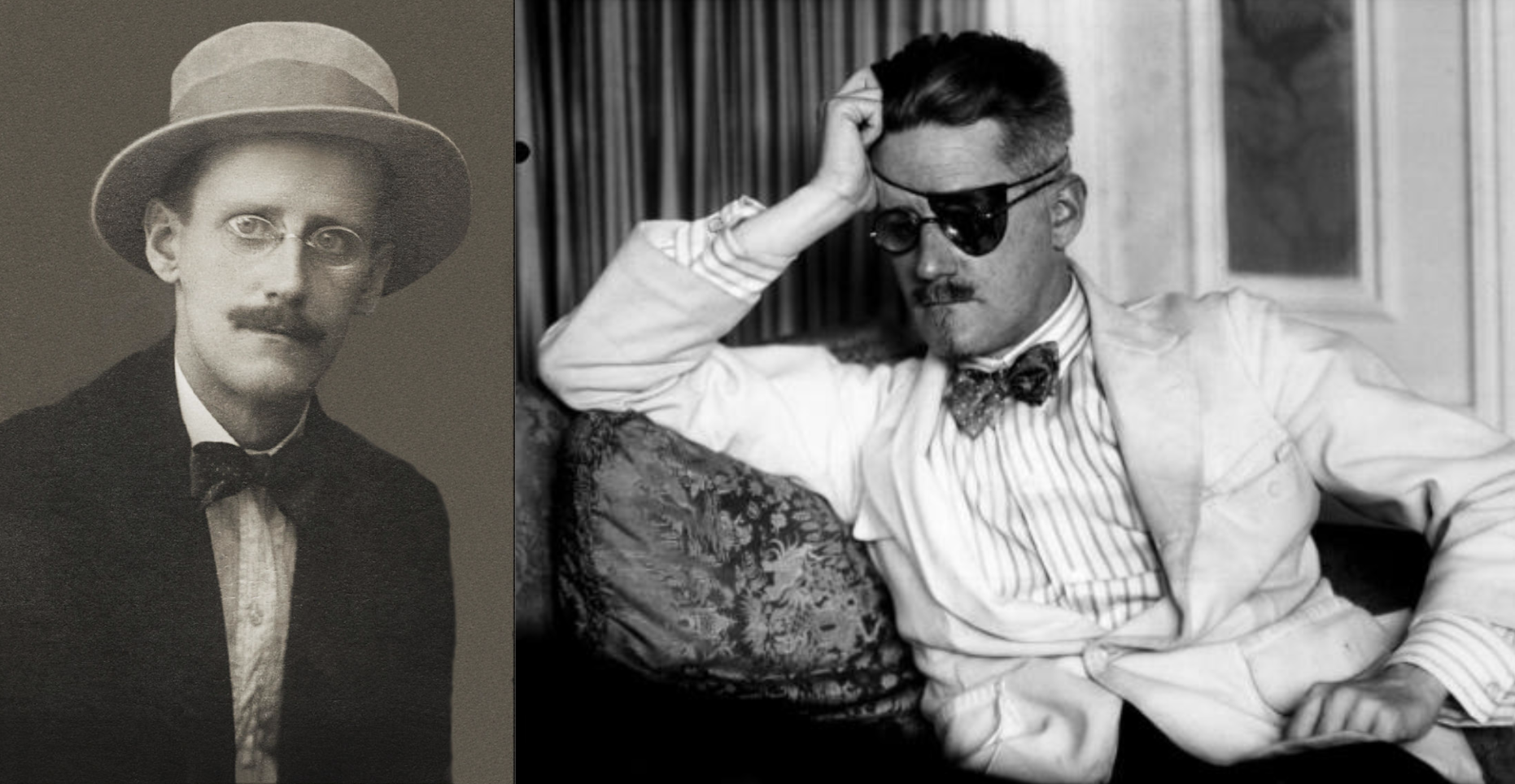
LB: You’d read Ulysses five or six times before graduate school, and maybe fifteen times since. What do you think makes the novel so special?
SN: One of the things about which Joyce is reputed himself to have complained is that what people don’t say about Ulysses is that it’s funny.3 I spent a long time working on comedy one way or another, and comedy is not profound despite the fact that it’s funny; it’s profound because it’s funny. It’s not the honey on the edge of the cup or anything.4 The point of it is the humour, that it’s in some ways the fundamental irrationality of humans: our desperate need to shape our lives into some meaningful narrative, even though we know that we’re mostly making it up as we go along. To my mind Joyce’s humour - and this is much more true of Ulysses than Finnegans Wake - points at something (although this is about as cheesy as you can get) profound in the human experience. We need some kind of meaning, and deep down we often suspect we’re just creating it ourselves… but we still have to do it, so we do it anyway.
Also, Fritz Senn has talked about Ulysses being primarily about loneliness, about alienation: Bloom’s isolation from Molly, Stephen’s isolation, a deep need to connect with people which they find practically impossible to fulfil. The deeper you get into Stream of Consciousness, the more you’re aware that the life you’re living in your own head may or may not have anything to do with the life that anybody else is living in their heads, that gulf between people. Joyce is talking about that, but some people have a deeply pessimistic reading of the novel… I don’t. Some people see that gulf as being fundamental, but I think that there are deep relationships, particularly between Molly and Bloom. Maybe neither of them will recognise it, but it’s there, and the reader can see it at some point. So that’s it.
LB: Throughout Ulysses a man in a brown macintosh is mentioned 11 times but never identified, a mystery which has puzzled Joyce scholars. Who do you think he is?
Joyce gives rise to lots of conspiracy theories. There's a whole book on that, a whole set of articles. Some scholars think it's actually Rudolph Bloom (Bloom’s dead father), and will prove that. If you ever meet them at a conference, they’ll sit you down for hours and hours and hours. Then of course, there are those who say it's actually Joyce, the author lingering behind everything, etc., etc. I take it as Joyce playing with you, a play on Chekhov's gun: if a gun is described it has to go off at some point. So he's taking the mickey out of you. Oh, look, there's a mysterious man in a macintosh; let's get lots of people to try to figure out who the mysterious man is. You will have noticed even in your young life, Louis, that sometimes you run across a mysterious stranger on the street, and actually they have absolutely nothing to do with your life, the rest of your existence. He obviously also wants to raise all kinds of questions about identity, how we know people, and what we remember.
LB: Some criticise Finnegans Wake for being elitist, out of reach for the everyday reader… but who is Joyce writing for?
SN: I say unapologetically: this is an old-fashioned romantic view. But I think ultimately, you have to write for yourself. From my point of view any artist has to write for themself… who knows what elements it is within the person that makes Beethoven know that this is the right way to put the notes together, even though he can't hear them? My sense is - and of course everything they teach you in school is absolutely necessary: you have to have a sense of your audience, etc., etc. - deep down, it has to be for you. Joyce was ultimately always writing for himself. So if that's elitist, I guess it's elitist.
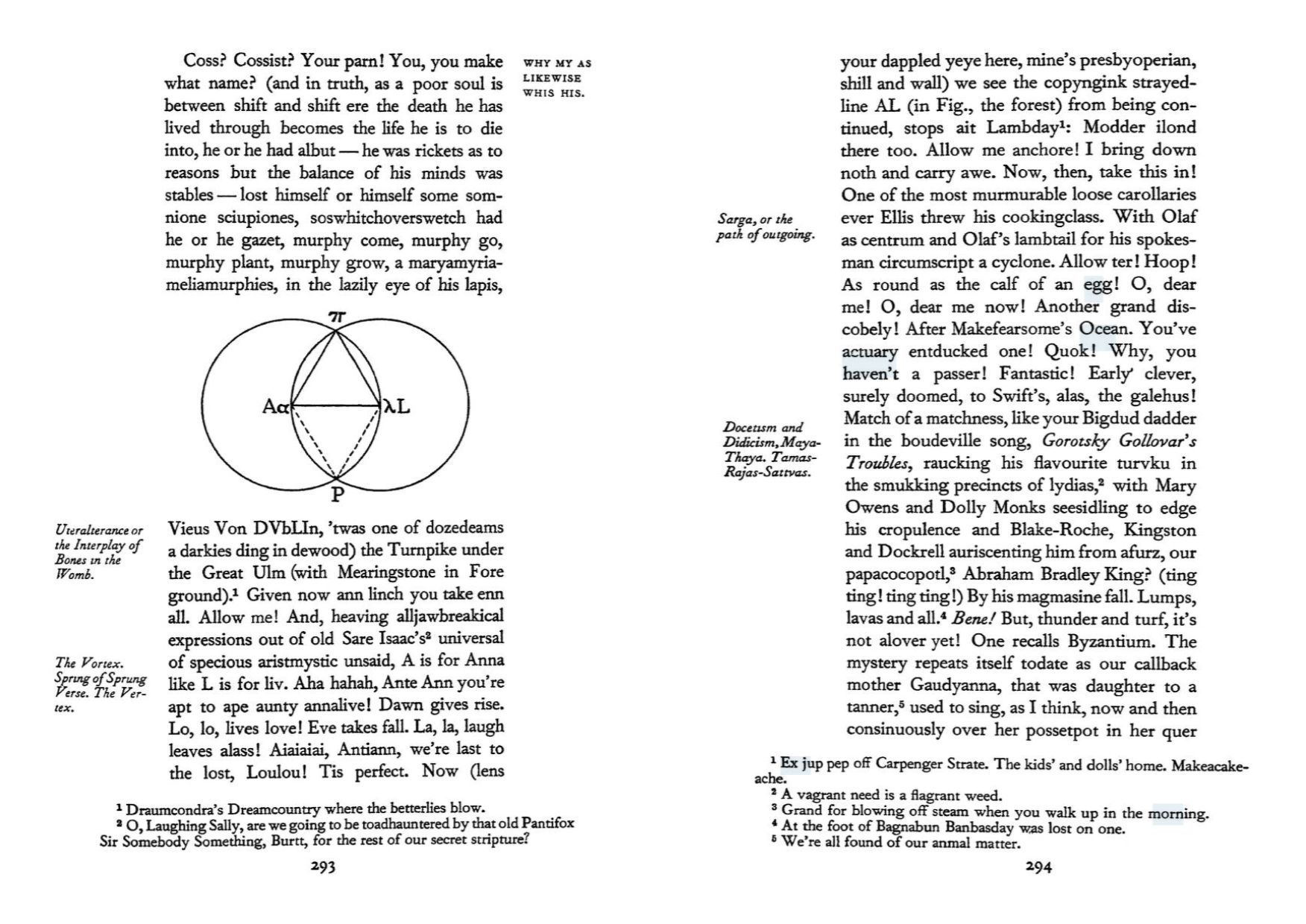
LB: Do you have a favourite quote from Finnegans Wake?
SN: I don't, and it always amazes me that my friends, who are real Finnegan fanatics, can reel off tons of it. One of the games in Joycean circles that I always find particularly funny, but can't do myself, is finding some passage from Finnegans Wake to give the perfect title for every paper. Fritz Senn from Zurich is incredible at that; he'll always come up with something that’s absolutely spectacular. But what I do have on the wall of my office, because I was at a Joyce conference - and again it's interesting: for some reason a lot of visual artists get very, very into working with Joyce, and I really don't know why that is, but I'm fascinated by it - and there was this guy who does illustrations of parts of Finnegans Wake, and he had one with:
"Now, patience; and remember patience is the great thing, and above all things else we must avoid anything like being or becoming out of patience."

- FW 108.08-10
He did a beautiful job of it, and I said to myself: that's the perfect thing to put in my office. So, as I sit talking to my sometimes frustrating students or sometimes frustrating colleagues, behind their back I have my patience quote, and I look at that periodically. Finnegans Wake to live by, as they say.
LB: Finally, if you could meet Joyce, what would you ask him?
First of all, it would depend on what time in his life. It always amazes me - you'd think I'd be old enough to have got over this now - how truly great writers can be such bogus human beings. By the end of his life, he'd become so bourgeois, not at all in his writing, but in his human relations. He was such a poser, the Great Artist. Nobody ever used his first name except family; he always held everybody off. Most of the conversations I've read with Joyce and other people are just his self-performance. So if it was the older Joyce I would just ask him a question and let him get on with his self-performance. I wouldn’t expect to actually hear anything from him, but it was always interesting to see how he wanted to perform. If it was the younger Joyce… that would be really interesting. Some of Joyce’s most fascinating letters are the ones when he’s in Rome and writing to his brother, who’s in Trieste, and he’s genuinely communicating, really thinking about things. But no, I think I would probably still let him talk about whatever he wanted to talk about with the idea that - you must have heard this, it’s a great line - asking authors about literature is like asking birds about ornithology. They do it, they don’t analyse it. I don’t have a sense that I could just ask him the right question and get a profound answer; the answer’s in the literature he writes, not what he says about it.
-
To illustrate, the chapter begins:
Ineluctable modality of the visible: at least that if no more, thought through my eyes. Signatures of all things I am here to read, seaspawn and seawrack, the nearing tide, that rusty boot. Snotgreen, bluesilver, rust: coloured signs. Limits of the diaphane. But he adds: in bodies. Then he was aware of them bodies before of them coloured. How? By knocking his sconce against them, sure. Go easy. Bald he was and a millionaire, maestro di color che sanno. Limit of the diaphane in. Why in? Diaphane, adiaphane. If you can put your five fingers through it it is a gate, if not a door. Shut your eyes and see.
back -
We learn, eleven chapters later, that the potato was given by his late mother Ellen as a “Preservative against Plague and Pestilence.” The literary critic Hugh Kenner notes:
Ulysses is so designed that new readers, given, even, what cannot be postulated, ideal immunity to attention overload, cannot possibly grasp certain elements because of a warp in the order of presentation, and veteran readers will perceive after twenty years new lights going on as a consequence of a question they have only just thought to ask.
back -
To Djuna Barnes, in an interview in Vanity Fair, Joyce remarked:
The pity is the public will demand and find a moral in my book — or worse they may take it in some more serious way, and on the honor of a gentleman, there is not one single serious line in it.
back -
A metaphor from Lucretius’ De Rerum Natura. Gruber explains:
[…] as a doctor puts honey on the rim of a cup to entice children to drink bitter wormwood, so Lucretius uses poetry to make the Epicurean message easier to swallow
back