
Professor Robin Meyer is a prolific linguist — from 2018 to 2020 he was the Diebold Research Assistant in Comparative Philology and an instructor in Latin and Greek at Oxford University, and since 2020 he has been Assistant Professor of Historical Linguistics at the Université de Lausanne. In this interview, we’ll be asking him about his passion for linguistics, the quirks of English, how you can learn an ancient language, and much more. Professor Meyer has also kindly attached a number of links, so if you’re interested feel free to click on those as you’re reading — enjoy!
LB: After completing an undergraduate degree in Classics and Oriental Studies, you took an MPhil in General Linguistics and Comparative Philology at Oxford, then a PhD researching the historic relationship between Classical Armenian and Western Middle Iranian. You’ve produced countless monographs, articles, and talks since, on a whole host of linguistics-related topics. It’s one thing to try a new language, another to learn well over a dozen—Latin, Greek, Armenian, Sanskrit, Persian, German, French, Spanish, Turkish, Welsh, the list goes on and on! I’d love to know what first drew you to studying linguistics in particular, and dedicate your life to exploring how language works?
RM: First of all, thanks for your questions, Louis! Languages, old and modern, have played a major role in my life ever since I can remember, really. I’m originally from Germany and grew up, at least to begin with, in a monolingual family. When it came to choosing my first foreign language at school, at around age 10 – unimaginably late for modern standards, but such was the system back then – I went for Latin after a memorable half-hour introduction to the language by the person who would later become my first Latin teacher. After Latin came English – both at school and at home, since my siblings both married English speakers – then French and Spanish; languages were clearly writ large at my humanist school. I also tried my hands at Mandarin (in evening classes at our local further education college) and at Esperanto. I loved (and still love!) exploring the way in which these languages are similar and different: when and when not to use a subjunctive, how to be sufficiently polite (or impolite!), all the different fixed expression they develop, etc.
When it came to deciding what to study at university, it was a close call between Classics and Chemistry, but the older passion prevailed. I took up Ancient Greek at Oxford, once more with excellent teachers, and learned to love and appreciate the ancient languages even more than I had before, now spending most of my days in close contact with them. At the same time, however, I realised that ancient literature – or at least the way in which much of ancient literature was treated at university, often from slightly too theoretical or somewhat anachronistic perspectives, at least in my view – was not my cup of tea and that I much preferred the philology and linguistics, that is the fine details of language use and development. To that end, I decided to take up another language and landed on Armenian, which I felt was sufficiently familiar due to its Indo-European roots and contact with Greek, but equally fascinatingly different owing to its rich and turbulent history at the crossroads between “East and West”.
From then on, it was a reasonably straight road to other languages that “one should know” when working with the ones I had already learned. I remember vividly when my supervisor told me at the beginning of my first year as an M.Phil. student that this term, I had the singular opportunity to learn Sanskrit, Old Persian, and West Middle Iranian – not to mention the normal linguistics courses. It has not always been easy, but it has always been a pleasure; I have by now without doubt forgotten many things that I once knew well, as one cannot keep up all languages equally well, but each encounter with a new language, or digging back into a language once familiar is exciting.
LB: In a recent article, you explored how historical linguistic facts can help with language-learning—like how the circumflex in French suggests an older missing “s,” so you can tell that “forêt” is related to our “forest.” I loved that example—do you have any favourites for English, a process that tells you why we’ve ended up with the strange words we have?
RM: Modern English is a rather difficult candidate for this approach since it is relatively poor in morphology – and commensurately richer in other regards – and thus does not lend itself to such explanations. Historical linguistics can, however, tell us why English (like other languages) does, at times, behave as oddly as it does – just think about the different ways in which the sequence -ough- can be pronounced… A good example to illustrate this kind of oddity is the formation of the plural in English: we all know that most of the time, we only have to add an –(e)s to the end of the word (house-s, fox-es, group-s, etc.); for a few other words, there are plurals in –(r)en (ox-en, child-ren), and others yet have plurals without any ending (fish, sheep).
In the history of some words, the formation of the plural has changed, and we can sometimes see hangovers of this change. Take brothers: the original plural was brethren, and this form still exists but in a restricted sense – not just any brothers, but brothers by choice, most commonly in a religious order. Why this change? Well, the formation in -s had become more or less the standard, and in such circumstances a process called proportional analogy allows speakers to create new, ‘more regular’ forms; in doing so, the old forms can either be lost, or retained with specialised meanings.
Why some forms change and others don’t – why don’t we say childs? – is difficult to determine. Take another example: the plural of book is books, but that of foot isn’t foots, but feet. Although the latter appears unusual or irregular to us as speakers of Modern English, it is actually the original plural formation – and for book, too, we could have had a plural like beech (in Old English, it was very close to that: bēċ /beːt͡ʃ/). Why did foot keep its original plural while book innovated? We can speculate and invoke frequency effects – some highly frequent words are less susceptible to change – but it is just that, speculation. These examples do, however, beautifully illustrate what is called Sturtevant’s Paradox: the fact that sound change is regular but can produce irregular forms (foot, feet), while the process of analogy mentioned above applies irregularly and unpredictably, but gives us regular forms (book, books).

LB: For the reader keen to learn a language not spoken anymore—maybe Latin or Greek, or something less mainstream like Akkadian or Classical Armenian—where would you recommend starting? And what piece of advice would you give?
RM: Learning ancient languages is great fun, but can be a challenge without a good guide or teacher, especially when resources are limited, pedagogically outdated, or presuppose knowledge of other languages. In addition, learning a historical language also requires a certain familiarity with the culture, religion, and literature of the time period to actually understand what is going on – partly because you cannot simply go there and immerse yourself in that culture. For those reasons, more or less formal settings such as offered in language classes at school, at university, at churches, learning centres, or by particular associations or summer schools are probably the best way of learning such languages meaningfully – but they are, of course, not accessible to everyone and not every language will be available.
If you are dead set on learning an ancient language on your own, choose a good textbook with good, recent reviews, and work through it slowly; there is little sense in working through four chapters worth of grammar of an evening and retain nothing of it. For language learning in general, “little and often” is the best approach. At the same time, read about the time and people with which your language is associated to immerse yourself as much as possible in their way of thinking. If at all possible, find a friend in your community, or a partner online who is also interested in learning; motivation is important in learning a language, and more readily kept up when one isn’t alone.
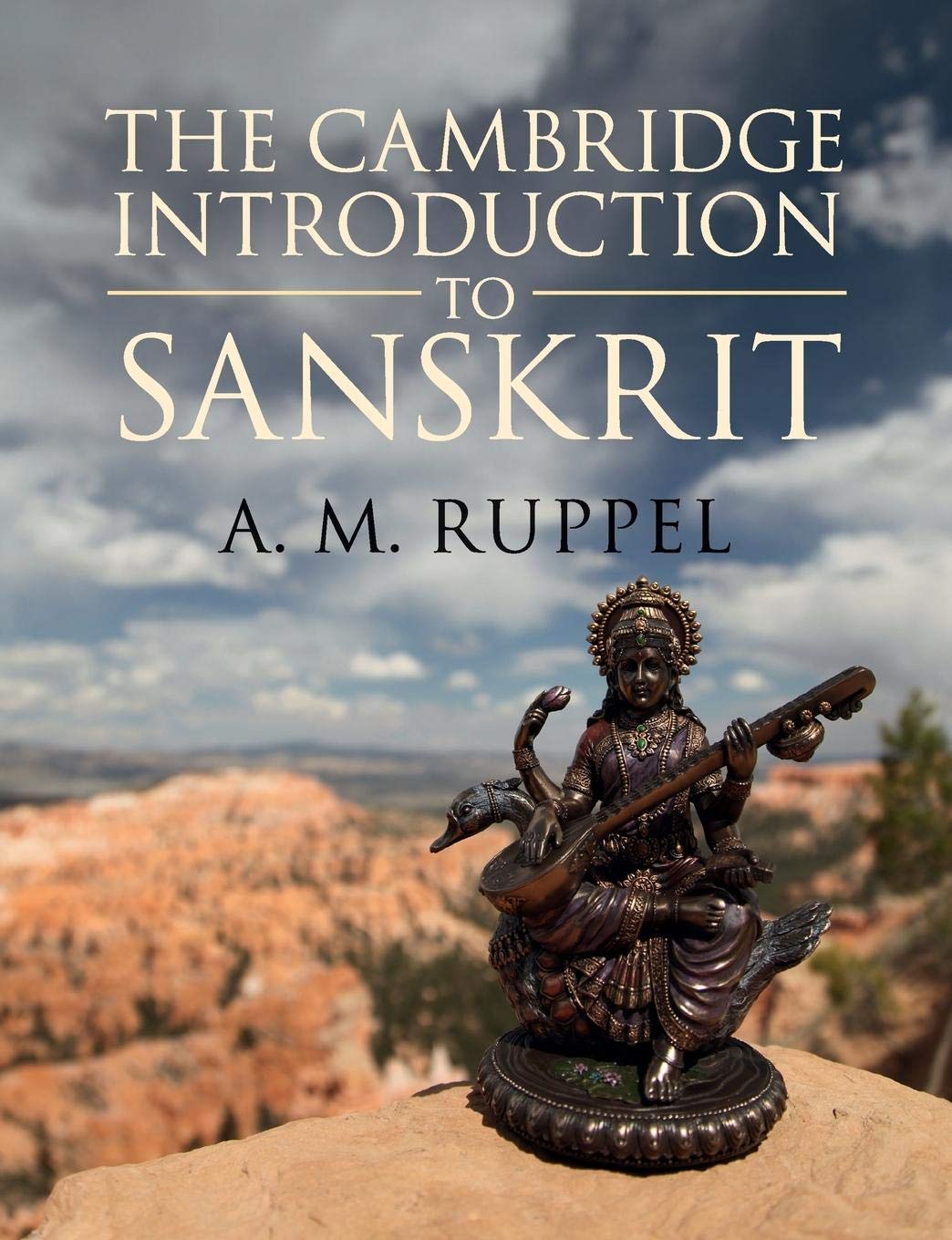
An excellent example of a textbook (with accompanying materials) that lends itself to this autodidactic approach is Antonia Ruppel’sThe Cambridge Introduction to Sanskrit, which is as clear and transparent an introduction to an ancient language as one could possibly hope for.
LB: A lot of your work looks at ancient languages, and the relationship between them; you’re probably more familiar with them than nearly anyone. I’m curious—after exploring so many in detail, do you have a favourite, or one you find the most interesting? And if so, why?
RM: That’s a rather difficult question! I’ve spent the better part of the last fifteen years trying to explore Old Armenian and the various aspects and challenges that this language has to offer, and I don’t think I am anywhere near done – there is still so much to figure out! Especially in matters of diachronic syntax and the role that contact with other languages has played in the development of Armenian, there are multiple lifetimes of work yet ahead. I’ve been working on the structure of relative clauses for a while now, and recently have been spending more thinking about the future tense and its history in Armenian. For both of those, it’s the puzzle that is most attractive: we have comparative data from other Indo-European languages and from neighbouring non-Indo-European ones, and we have typological insights into how such structures tend to develop in languages in general. With what we know and what (sometimes severely limited) data we have, what conclusions can we draw, and what do they tell us about the history of the language and its people, or how do they change or affirm our perspective on language typology more generally?
At the same time, I haven’t forgotten my ‘first love’, Latin, and hope to soon be able to work more on the history and development of its relative clauses, in particular because in Latin we have much more data for a much longer period of time, and multiple well attested daughter languages which will raise other questions: why do some changes in Late Latin have straightforward consequences in Early French, Early Italian, etc., and others lead to absolutely nothing? To what extent is the written, formal language different from or similar to the spoken language, and (how) is that difference expressed in the history of that language? These are fundamental questions that apply across all languages, and for which Latin and its daughters offer us better potential insights than most other settings.
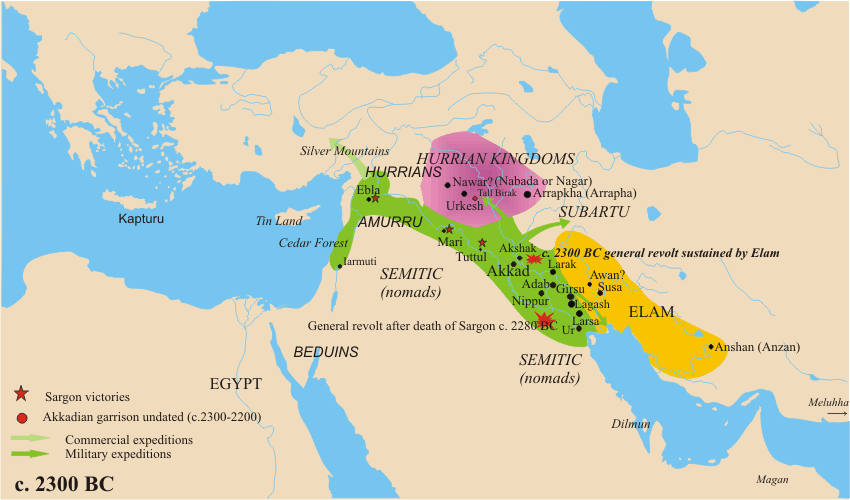
Finally, I would love to have more time to get back into Hurrian and Urartian, two related historical languages of the Southern Caucasus (or Northwestern Central Asia, if you prefer) from the late second and early first millennium BC. They are completely different from the Indo-European languages I spend most of my time with, and certainly from a linguistic perspective, we have not explored them nearly as much as we would like to. When, or indeed whether, I’ll get there in the foreseeable future is, however, a rather different question.
LB: Finally, if you could have dinner with any three people related to language, linguistics, or your work—dead or alive, maybe a well-known linguist or author—who would you invite, what would you eat, and what would you talk about?
RM: I’m going to be eclectic here. I’d invite the Roman grammarian Varro, whose de lingua latina provides fascinating insights into how the Romans thought about their own language, its history and function; the person (or collective) who translated the Art of Grammar, a treatise on the Greek language attributed to the second-century BC grammarian Dionysios Thrax, into Old Armenian (and rather made a mess of it); and Antoine Meillet, one of the great philologists of the late nineteenth and early twentieth century and a specialist in all things Indo-European and Armenian in particular. We’d have snails as a starter – the Romans were so fond of them, they even imported them to Britain where they are still found in some places today – followed by horse, chips and salad – likely anathema in antiquity with a side of unknown root vegetables – and honey cakes for dessert, all paired with a good Falernian wine. What would we talk about? Apart from the food, I have a feeling I would be bombarding them with a variety of questions: what did Varro talk about in the books of de lingua latina now lost to us? What were the translators of the Art of Grammar thinking when they produced a ‘translation’ that describes neither Greek nor Armenian correctly and just made some stuff up? What would Meillet think of the advances in historical linguistics that have been made since his death in 1936? It would be rather lively, I daresay.