
Patrick Radden Keefe is an award-winning investigative journalist. He’s written five books and countless articles over the past twenty years, and is a staff writer at The New Yorker. You can find some of his work here. I’m a big fan of his 2020 podcast, which looks at a rumour that the CIA secretly wrote the Scorpions’ song Wind of Change. In this short interview, we’ll be asking him about the process of writing and researching — where he finds stories, how he’s influenced by other writers, and his breakthrough moments — so enjoy!
LB: Thank you so much for agreeing to speak with me—I’ve loved reading your work. You’ve investigated the most incredible and varied topics, from the hunt for Mexican drug lord El Chapo to the 1972 abduction and murder of a woman from Belfast during the Troubles, and the Sackler family’s role in marketing the highly addictive painkiller OxyContin. How do you find such groundbreaking stories?
PRK: I don’t have any particular system for finding stories. I try to read as widely as possible, and often find ideas in the margins of other things. If there’s a paragraph or two in a newspaper article or a chapter of a book that I find particularly intriguing, I’ll see what else I can learn. I also try to spend as much time as possible offline, out in the real world, talking to people. The book I’m finishing right now grew out of a casual conversation I had two summers ago with a total stranger. We just started chatting and he told me a story.
LB: I’m also interested in the stories you’re forced to leave behind—maybe because people won’t speak, it’s hard to verify information, you’re worried in some way about revealing something that’s been hidden for years, or something else entirely. Are there many of these, and is there any example you can share?
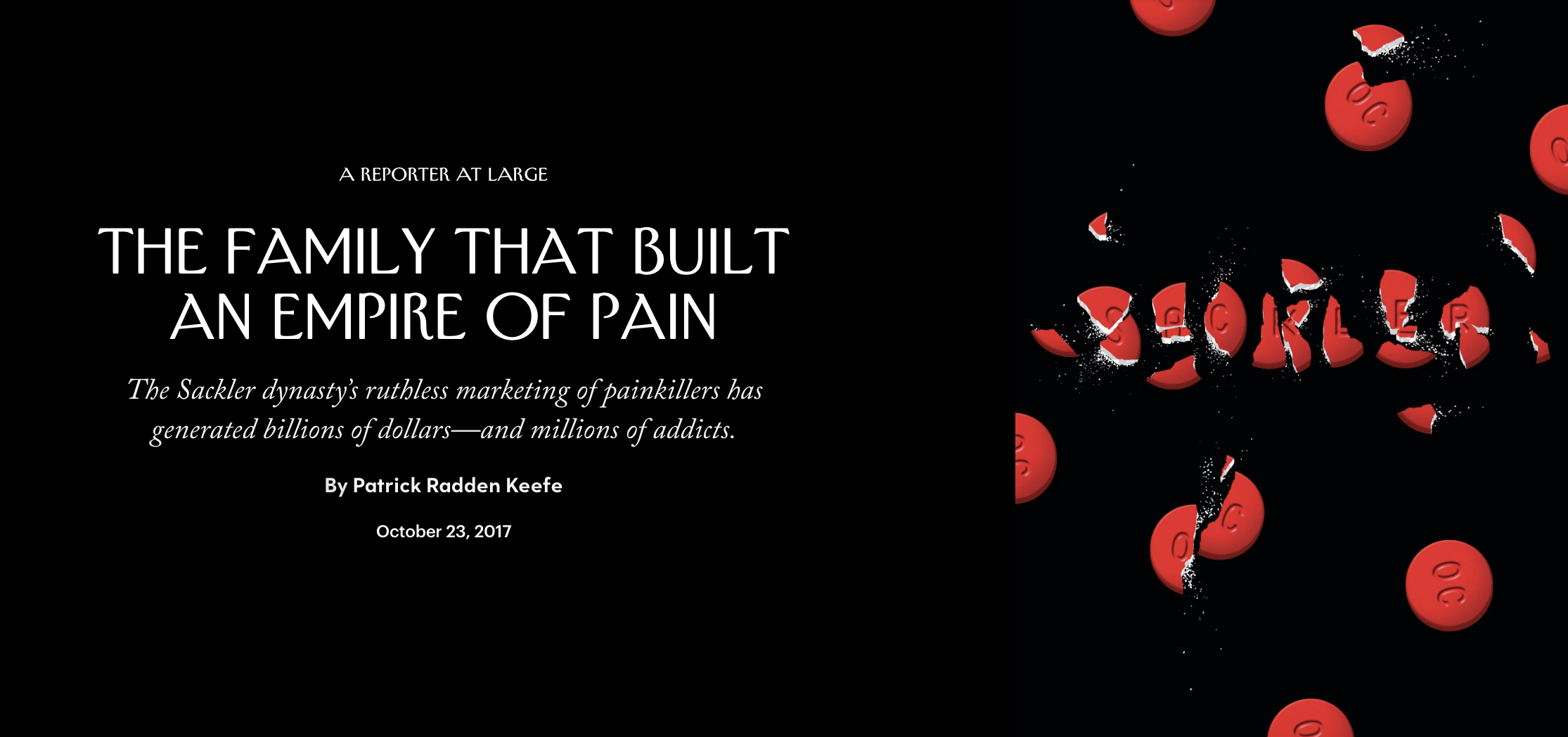
PRK: At any given moment I’ve got four or five things going. Some are in the very early stages, some are more advanced, and some will never end up seeing the light of day. You’re correct that sometimes I’ve had to leave certain stories behind because I can’t get enough information, or because I lose interest or become busy with other things. But the really good stories have a tendency to stick with me, so even if I set them aside, they have a way of coming back later. In 2017 I published a big article about the Sackler family. At the time, I concluded that there wasn’t enough information for me to do a book, even though I would have liked to. But then in 2019, there was a lot of litigation that produced a bunch of new documents, shedding light on the family and their business, and I concluded that finally there was an opportunity to write the sort of book I had in mind.
LB: I’m currently studying American novels at school and I’m really enjoying looking at how authors influence each other. So I’m curious—are there any writers who have influenced the way you tell stories? Or is it the case that when you’re writing for a publication—The New Yorker, say—there’s a prescribed style you’re expected to follow?
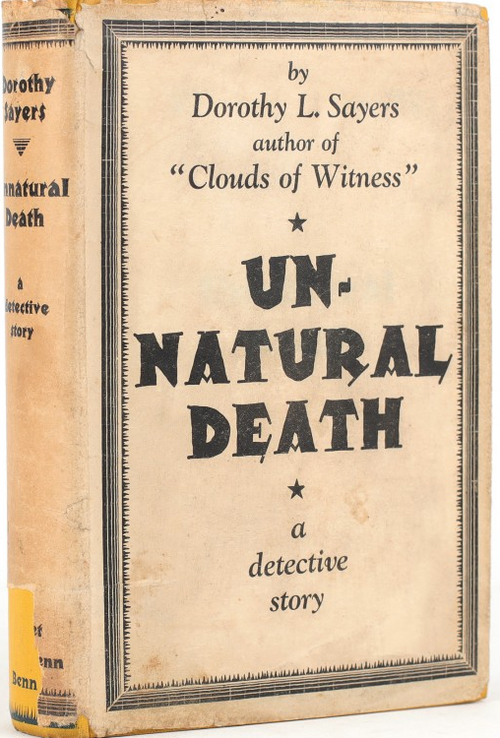
PRK: There’s not a prescribed style at The New Yorker per se, but if I’m being honest, I’ve been so influenced by my own reading of classic New Yorker pieces that there may be a certain idiom I’ve absorbed along the way. I’m influenced by many people who wrote for The New Yorker in the past, people like Janet Malcolm and Truman Capote, and by some of my colleagues now, people like Rachel Aviv or David Grann or Larissa MacFarquhar. But I also grew up reading English detective novels—Agatha Christie, Dorothy L. Sayers, P.D. James—and that attention to plotting and suspense probably sunk into me at an early age as well.
LB: At the beginning of your podcast Wind of Change, you say that, as a journalist, you’re “driven by a conviction that the real story lies inside whatever literal or figurative room you’re locked out of” and “spend your days trying to get glimpses inside.” In all the cases you’ve worked on, you must have experienced some amazing breakthrough moments. Is there one that stands out above the others, when you found the key and realised that you really had a story to share?
PRK: The biggest of all for me was when I had been working on my book Say Nothing for four years, and had actually finished the manuscript, and was just going over some old interview transcripts for one final time, and discovered the identity of the person who committed the 1972 murder that forms the core of the book. It was a very intense moment.
LB: Finally, if you could have dinner with any three figures from your cases you’ve investigated, dead or alive, who would you choose, what would you eat, and what would you talk about?
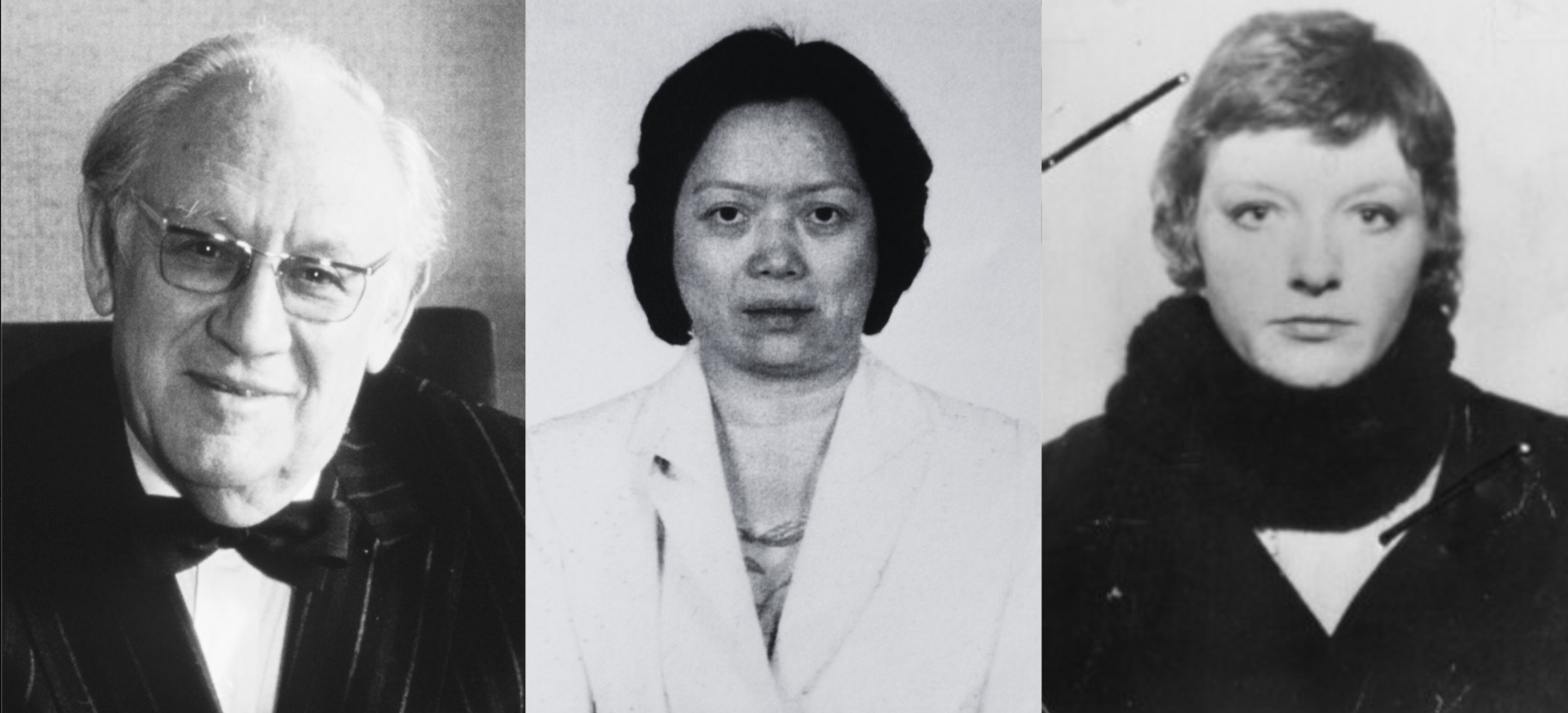
PRK: Arthur Sackler, Sister Ping, and Dolours Price.1 We’d eat good Chinese, in deference to Sister Ping, and we’d talk about the uses (and misuses) of charisma.
-
If you’d like to learn more, these feature in the following books of his:
Empire of Pain: The Secret History of the Sackler Dynasty (2021)
The Snakehead: An Epic Tale of the Chinatown Underworld and the American Dream (2009)
Say Nothing: A True Story of Murder and Memory in Northern Ireland (2018)