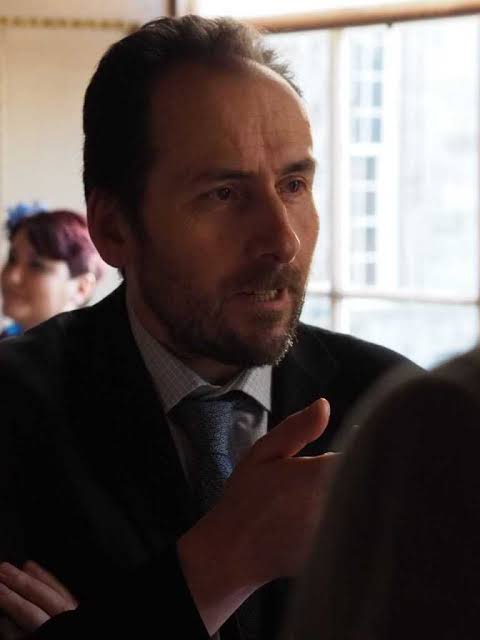
Professor Llewelyn Morgan teaches classical languages and literature at Oxford University, is Chair of the Classics Faculty Board, and came to Brasenose College in 1997. You can find a list of his publications here, including the Very Short Introductions to Horace and Ovid. He’s especially interested in Roman poetry, including metre, the Augustan poets, and late 19th century Latin; this is what we’ll be asking him about, so enjoy!
LB: I’m really enjoying reading through your blog, where you’ve combined fresh insights with an infectious enthusiasm for Roman poetry (and a good deal else) for over a decade. It’s all too easy to lose track of time reading through your catalogue of short posts, always sharp and energetic, or researching further something you discuss that I’ve never seen or thought about that way before. When I heard you’d be speaking at a Latin conference my school planned on attending, I was very excited; we hadn’t studied your text - Juvenal’s Satires, poetry comically criticising his fellow Romans - but still found your talk absolutely captivating. Above all, your passion, and skill at communicating that passion, shone through. But what sparked this passion for Roman poetry, and how have your interests developed over 25 years of teaching Classics at Oxford?
LM: I fell for Latin (and Greek) when I was about 16 or 17, and the reason was what the reason often is, an inspirational teacher, Douglas Cashin. I dedicated my last book to him, as that was on Horace, and he had introduced me to Horace (among other things) by encouraging me to read a short book by David West, Reading Horace. In it West took a few odes of Horace and studied them in detail, and it just showed me how flexible Latin was made by being an inflected language (where the relations between words are indicated by endings, not by position), and how brilliantly Horace exploits the character of Latin in his odes, placing and combining words to maximum effect. All languages are expressive in their own way, of course, but I’ve always liked this flexibility of Latin, combined with its concision. Any language that can express “When those things that require to be changed have been changed” in two words, ‘mutatis mutandis’, deserves our respect.
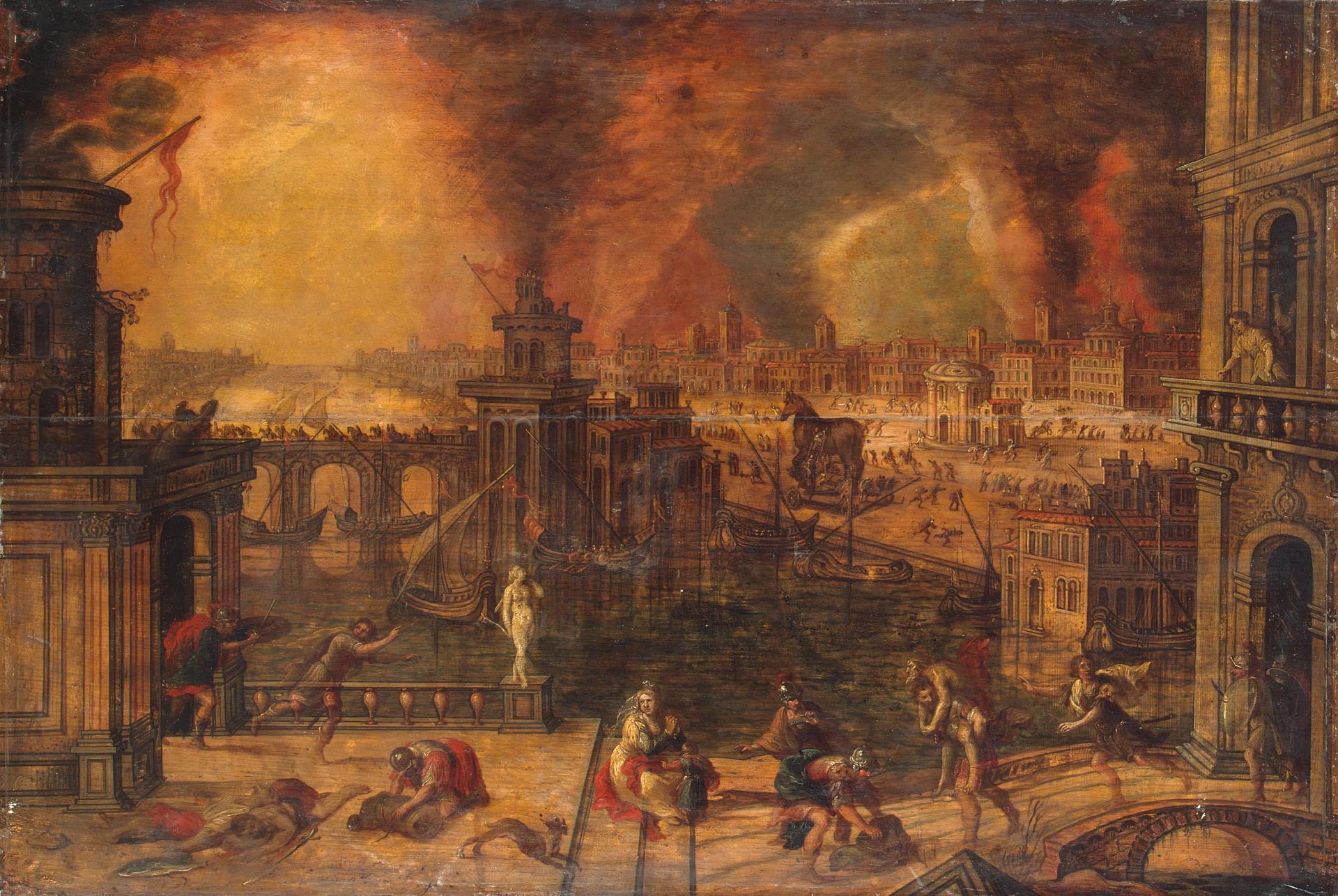
LB: Let’s raise the stakes. All Latin literature is ablaze, crumbling to ash before your eyes. You only have moments to snatch three texts from the flames. Which do you save, and why?
LM: Well, Lucretius expects something like that to happen to his poem sooner or later, given everything is mortal including the world and all it contains, and I shouldn’t stand in the way of that, in its way, quite beautiful idea. The Aeneid has been saved from fire once already, and Ovid claims the same about the Metamorphoses, less plausibly, so hmm, it’s tricky. All four books of Horace’s Odes, I think, treating them a little naughtily as one text, but Book 3 if I can only grab one bookroll; Statius’ five books of Silvae, occasional poems, and Book 4 with the road poem if I’ve only room for one; and I think the first book of Juvenal’s Satires, 1-5, just to ensure that people know the Romans were an interestingly self-hating bunch of people when occasion called for it.
LB: You’re written a book about metre, the rhythmic structure of lines of verse, and note that your main interest “has always been what difference it makes to the meaning of poetry.” Can you give us an example? And is the ‘feel’ of Roman poetry therefore lost when translating into English?
LM: Something is always lost in translation, and something always gained by reading literature in its original language. But there’s still a huge amount to be gained by reading literature in translation, and even if you’re pretty fluent in Latin, there’s a lot you won’t be getting from any given piece of classical writing that contemporaries might have got, nuances of meaning entirely lost to us. That’s something we should always bear in mind, but I suppose what I was doing with metre was adding to our reading of some Latin poetry something I think contemporaries would have brought to it, a sensitivity to its metrical vehicle—getting us a bit closer to the full potential impact of poetry even if we can never get all the way there. An example would be the one that first set me thinking about metre contributing to meaning, a poem by Statius from the end of the first century AD which celebrates a road leading to the Bay of Naples built by the emperor Domitian, and which, by virtue of being composed in hendecasyllables, a metre closely associated with Catullus, writing 150 years earlier, brings to Domitian’s road a Catullan character, that is, energy, youth, freedom, things that work well with the idea of a spanking new road. It’s a very unexpected choice of metre, so Statius clearly wanted and expected his readers to note it and give it its full weight.
Quis duri silicis gravisque ferri
immanis sonus aequori propinquum
saxosae latus Appiae replevit ?
certe non Libycae sonant catervae
nec dux advena peierante bello
Campanos quatit mquietus agros
nec frangit vada montibusque caesis
inducit Nero sordidas paludes...


What fearful sound of hard flint and heavy iron fills the stony Appian way where it draws nigh the sea? Certainly no Libyan hordes are thundering, no foreign chieftain scours restlessly the Campanian fields in treacherous warfare, nor is Nero hewing a canal, and making a way for squalid meres through cloven mountains...

- Statius, Silvae 4.3, trans. Mozley
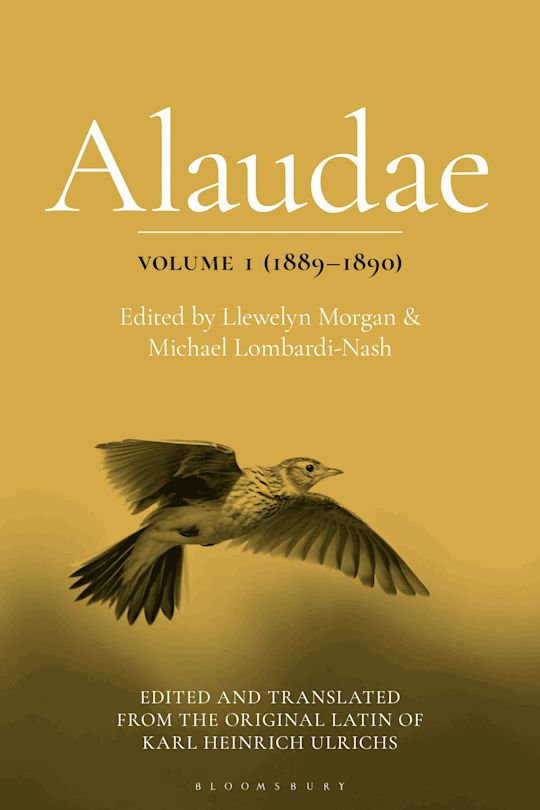
LB: You mention that you also have “a growing interest in Latin at the end of the nineteenth century, sparked by co-editing Karl Heinrich Ulrichs’ Latin-language newspaper Alaudae.” Rome fell in AD 476, and by the 18th century Latin was falling out of widespread use in Europe as a diplomatic language. Why study Latin composed any later?
LM: I think one of the things that most interests me about Latin written so late is that the writers are aware that time may be up, that this may be the last generation of composition in Latin. Ulrichs is trying to prove in his Latin-language newspaper that Latin is a language compatible with modern life, indeed that Latin can become again what it was for Erasmus and Thomas More, a lingua franca bringing Europe, so divided in Ulrichs’ day, back together again. That implies plenty of people claiming the opposite, of course. So Latin offers an oblique but interesting perspective on what’s bugging Europe as it approached 1900. Also, though, there’s Latin being written at the end of the nineteenth century that is not only interesting, but actually very good, and very worthy of our attention alongside earlier writers!
LB: What advice would you give to someone unfamiliar with Latin, but keen to learn more about Roman poetry?
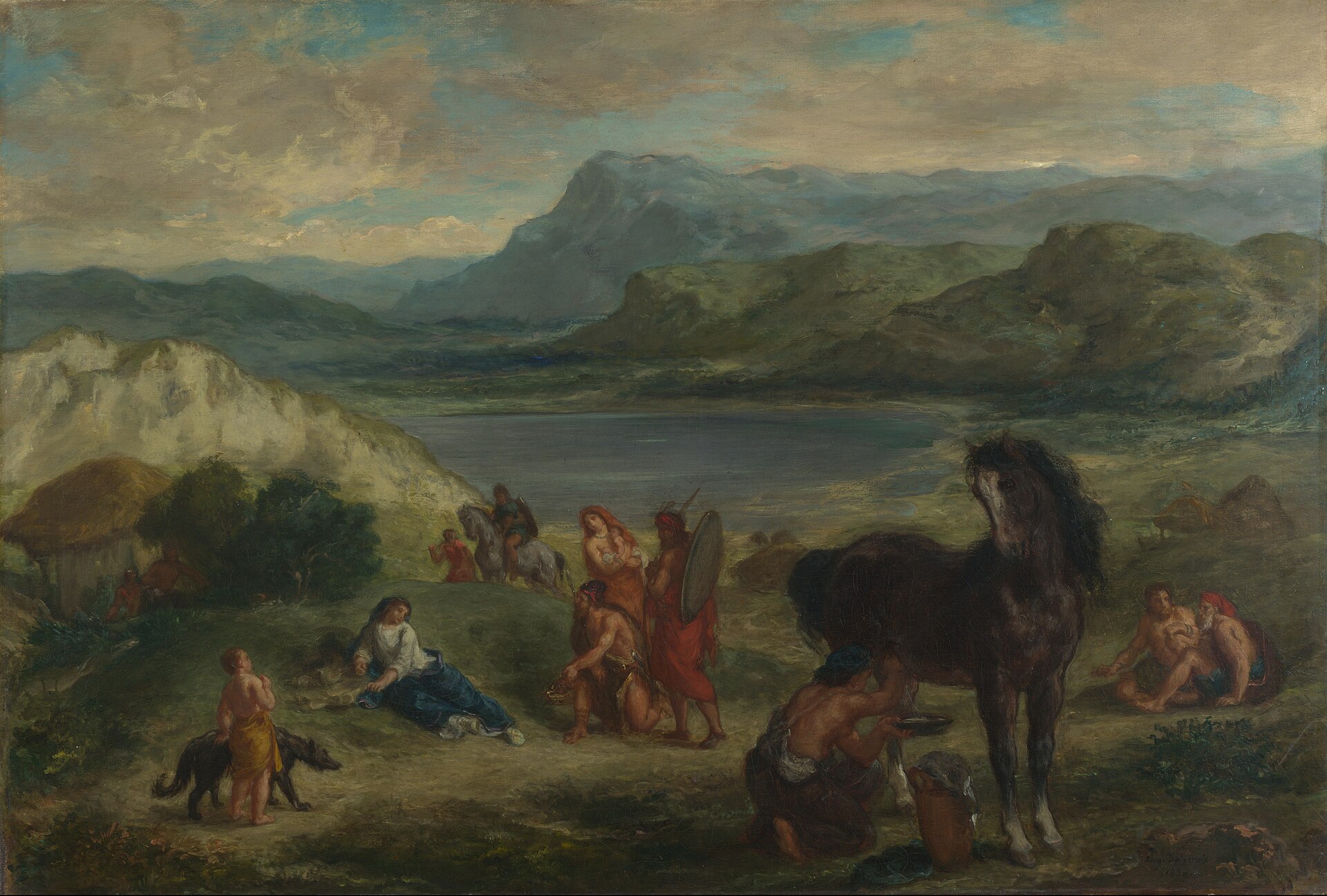
LM: I think I might encourage them to try learning some Latin. There is a JACT Summer School at Harrogate which offers bursaries to make attending easier, and it’s great fun in a nice town. But there are lots of really excellent translations of Greek and Roman texts, and I’d advise people with an interest to read and read and read. Homer’s Iliad and Odyssey, Virgil’s Aeneid, Greek tragedy, Thucydides’ account of the Peloponnesian War, Herodotus on gold-digging ants and Arion travelling home on a dolphin, Pliny the Elder on everything under the sun. It’s amazing what got the ancients out of bed in the morning.
LB: Finally, if you could have dinner with any three historical figures, who would you choose, what would you eat, and what would you talk about?
LM: Ovid, because he would be good craic and I want to know why he got exiled (we really don’t have a clue what the main reason was); Augustus, because I don’t expect Ovid to tell me the truth, and he’s seen a thing or two which it would be interesting to hear about. The company’s getting a bit explosive, so maybe as a third Zenobia, empress of the Palmyrene Empire in the third century AD. I’d like to know how she really spent her last years after her capture by the emperor Aurelian. Did she honestly spend it in comfortable retirement outside Rome? In any case, Zenobia would provide a jaundiced account of Roman behaviour that it would be good for Ovid and Augustus to hear. All I’d say about the food is no mushrooms and I’d like the services of a taster, please.